

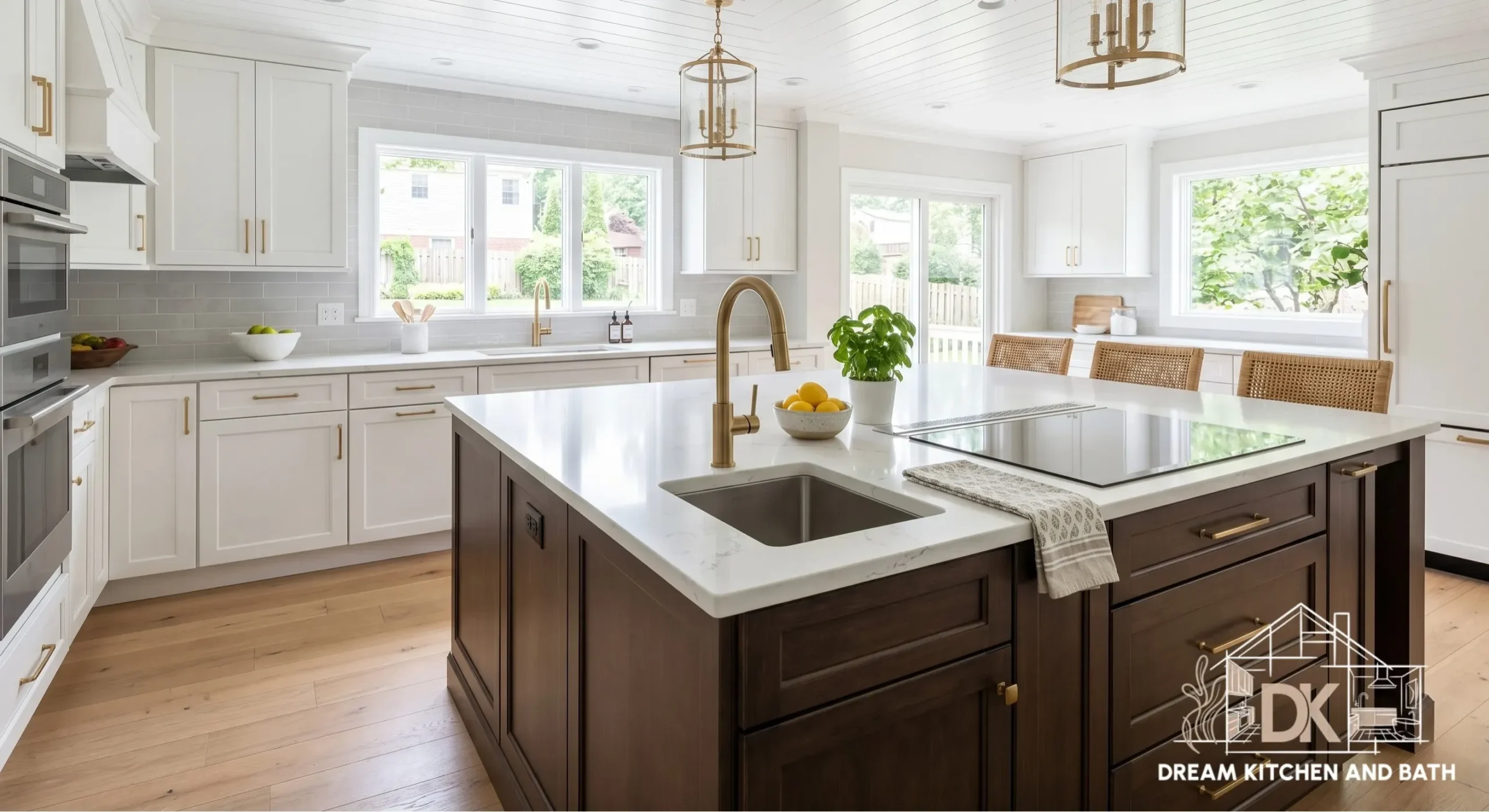
A 1960s split-level in Manassas has a kitchen that runs eleven feet across. The owners wanted a six-foot kitchen island with seating for four, and on the floor plan it fit. In the actual room it left nineteen inches between the island and the range, about the width of a dishwasher door, with nowhere to stand while the oven was open. The island lost a foot before the layout worked.
That gap between what reads well on a drawing and what functions in a real room is where most island decisions slip. A kitchen island is the feature homeowners ask us about most during design consultations across Northern Virginia, and it’s also the one people most often get wrong the first time: too big for the floor, too narrow to work on, surrounded by stools that sit empty, or fitted with a sink that became a plumbing and venting project of its own.
Getting it right comes down to a handful of decisions. How big the island should be, how much room you need around it, what you actually want it to do, what it costs in this market, and whether an island is even the right answer for your kitchen.
|
||||||||||
|
||||||||||
One island can’t do all four well. Rank them, then design around the top one. |
||||||||||
|
||||||||||
Measure with the appliance doors open. A 36″ aisle vanishes the moment the dishwasher swings out. |
||||||||||
|
||||||||||
|
||||||||||
|
||||||||||
|
||||||||||
|
||||||||||
Planning ranges, not quotes. Plumbing, electrical, and countertop choice move the number most. |
||||||||||
|
||||||||||
|
||||||||||
|
||||||||||
|
What a Kitchen Island Actually Does for Your Layout
An island does four jobs: it gives you prep space, it adds storage, it creates a spot to sit, and it acts as a landing zone for everything that ends up on a kitchen counter. The trouble starts when one island is asked to do all four at once. A surface that holds a cooktop, a sink, four stools, and the school backpacks rarely does any of those things well.
Pick the island’s primary job first, then let the rest follow. If you cook seriously, prep space and a clear, uninterrupted counter matter more than seating. If your kitchen is where everyone gathers, seating and a comfortable overhang come first, and the prep zone moves to the perimeter. Trying to rank everything equally is how you end up with a large island that frustrates you in small ways every day.
It’s also worth asking whether you need an island at all. On remodeling forums, plenty of homeowners who skipped one say they’d make the same call again. A common refrain: a freestanding table in the middle of the kitchen seats six, costs a fraction of a built-in island, and can be moved when you need the floor. In a narrower kitchen, a peninsula with a generous seating overhang often delivers the same gathering spot without eating the walkways on all four sides. We’ll come back to that comparison, because for a lot of Northern Virginia homes it’s the better answer.
Sizing and Clearance: Getting the Footprint Right
The most common island regret we see, and the one that fills remodeling threads, has nothing to do with style. It’s clearance. People fall for an island that’s beautiful and a few inches too big for the room, then live with tight walkways for years.
How Much Clearance You Need Around an Island
The working rule is simple. Leave at least 42 inches of clear floor on every side of the island where someone walks or works. If two people cook at the same time, or a walkway runs past an appliance that opens, go to 48 inches. The absolute floor is 36 inches, and most homeowners who build to that minimum wish they hadn’t.
| Situation | Recommended clearance |
|---|---|
| One cook, light traffic | 42 inches |
| Two cooks, or a walkway past an opening appliance | 48 inches |
| Absolute minimum (tight, not ideal) | 36 inches |
Remember that a 36-inch aisle shrinks the moment a dishwasher or oven door swings open. Homeowners regularly describe islands that technically met code but left no room to stand in front of the range. Measure with the appliance doors open, not closed.
The Minimum Room Size for an Island
As a starting point, you want roughly 13 feet of width in the kitchen before a standard island earns its place: about 24 to 42 inches for the island itself, plus 42 to 48 inches of clearance on the two sides people use. Many older homes in Northern Virginia, the 1960s and 1970s colonials and split-levels in particular, run narrower than that through the kitchen. In those rooms a slim island, a rolling cart, or a peninsula usually beats forcing a full island into a space that can’t hold one.
Don’t Strand the Island From the Work Triangle
An island also needs to sit close enough to the sink, refrigerator, and range to be useful. Push it too far out to fill empty floor and it becomes a place to set things down rather than a place to work. If you find yourself walking more than a few steps from the island to your main prep sink, the layout is working against you.
Choosing the Right Island Type
Once the size works, the next question is what goes on and under the island. Three configurations cover most kitchens.
The Prep and Storage Island
The simplest island is a clean run of counter over cabinets or drawers. No sink, no cooktop, no seating competing for space. It’s the most flexible option and the cheapest to build, because it needs no plumbing or dedicated wiring beyond the outlets code requires. For storage, deep drawers beat door-and-shelf cabinets for almost everything you’d keep in an island, a point worth carrying into your island cabinetry choices.
The Island With Seating
Seating is the feature people want most and plan worst. Two numbers decide whether anyone actually uses it.
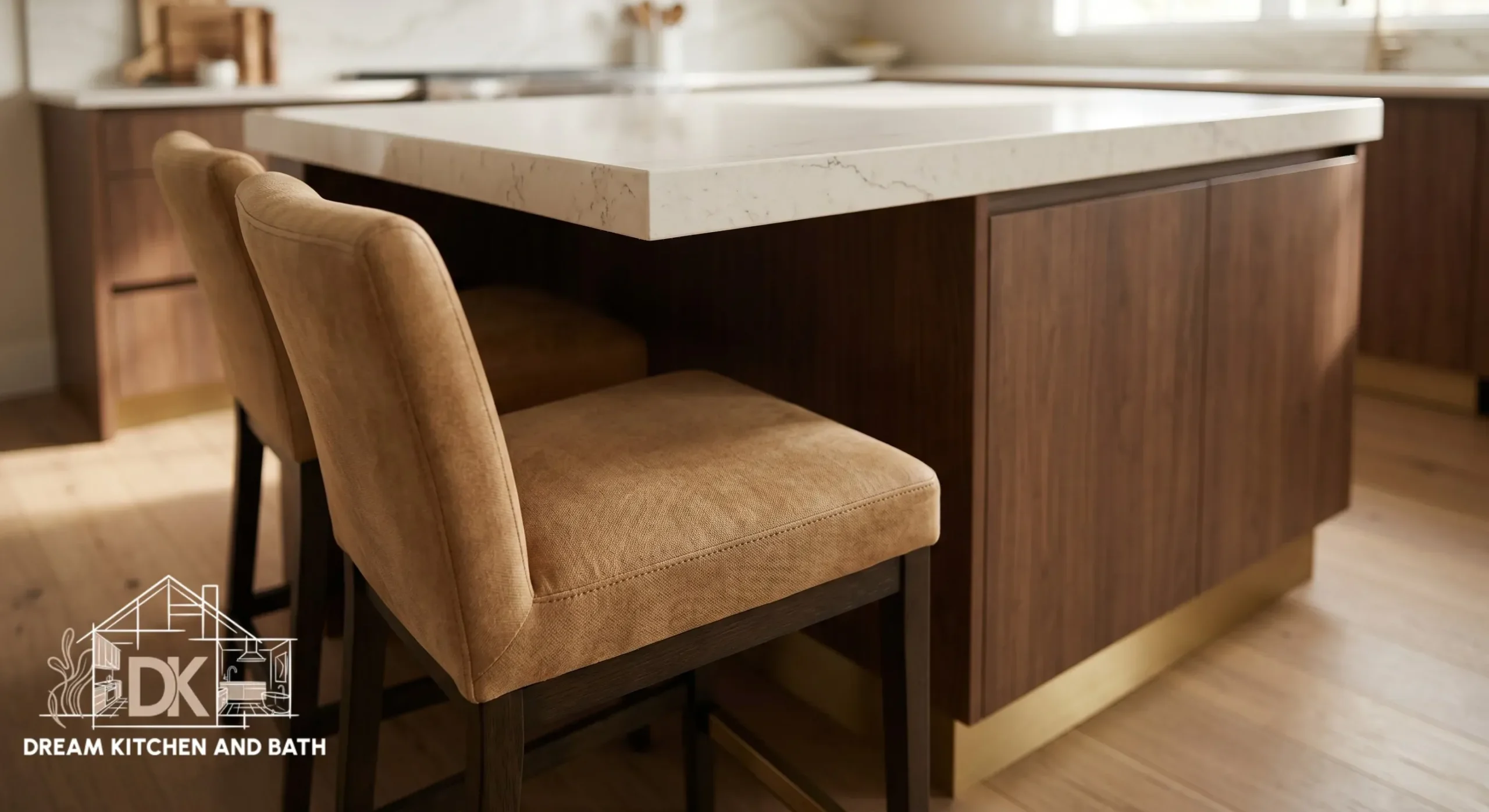
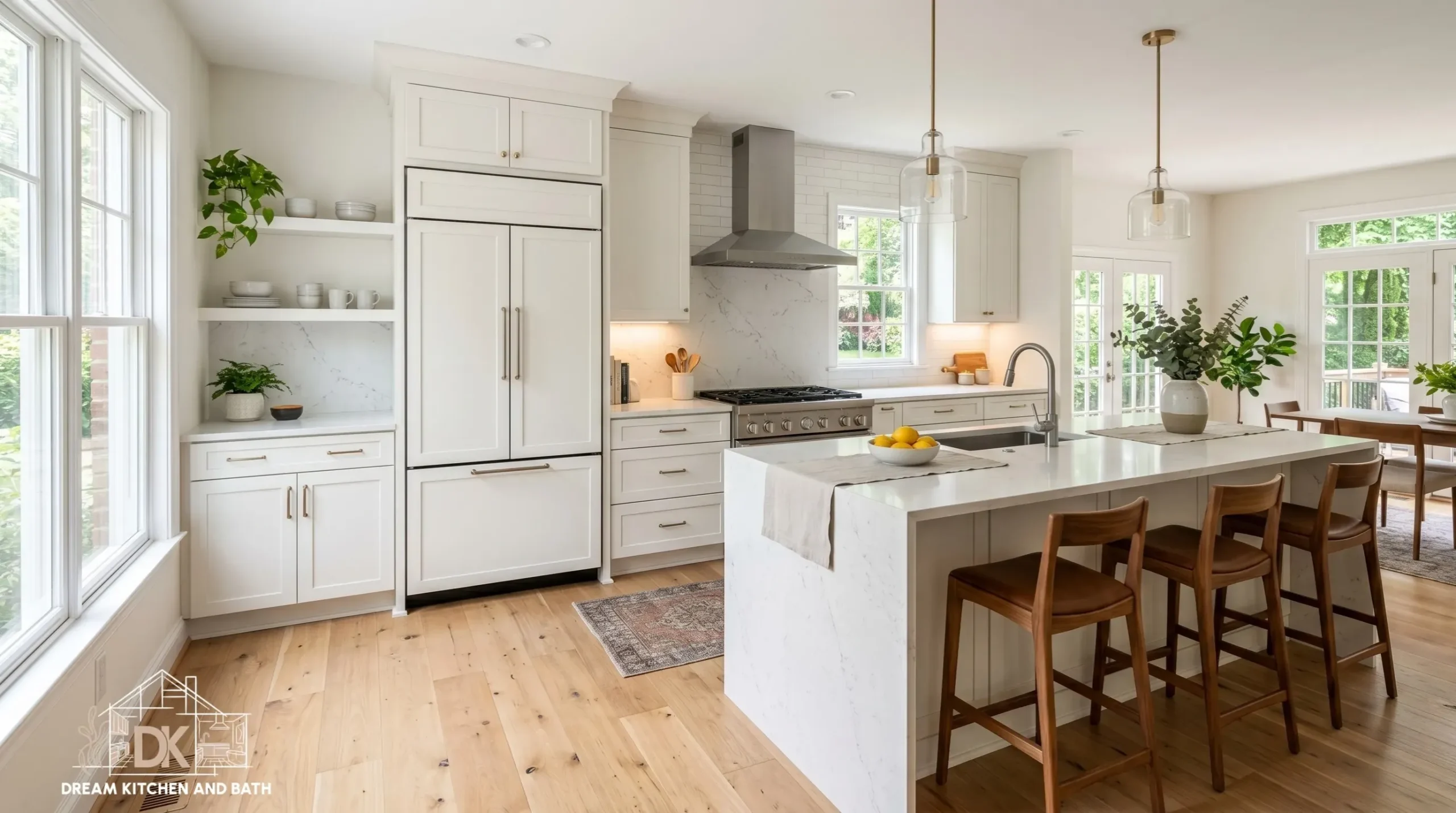
First, overhang. You need at least 12 inches of counter overhang for knees, and 14 to 15 inches is noticeably more comfortable. At 12 inches, many stools won’t tuck under the counter, so they sit out in the walkway instead.
Second, stool height and comfort. Counter-height seating (a 36-inch counter with 24-inch stools) is easier to get on and off than bar height. Backless stools look clean in photos and get uncomfortable fast, which is a big reason islands end up ringed by seats no one chooses. Be realistic about capacity, too. A typical island seats two or three people in comfort, not the dinner party you might be picturing.
Designer tip: If seating is the island’s main job, design the overhang and stools first, then size the rest of the island around them. It’s the reverse of how most plans get drawn, and it’s exactly why so many islands end up with seats that stay empty.
The Island With a Sink or Cooktop
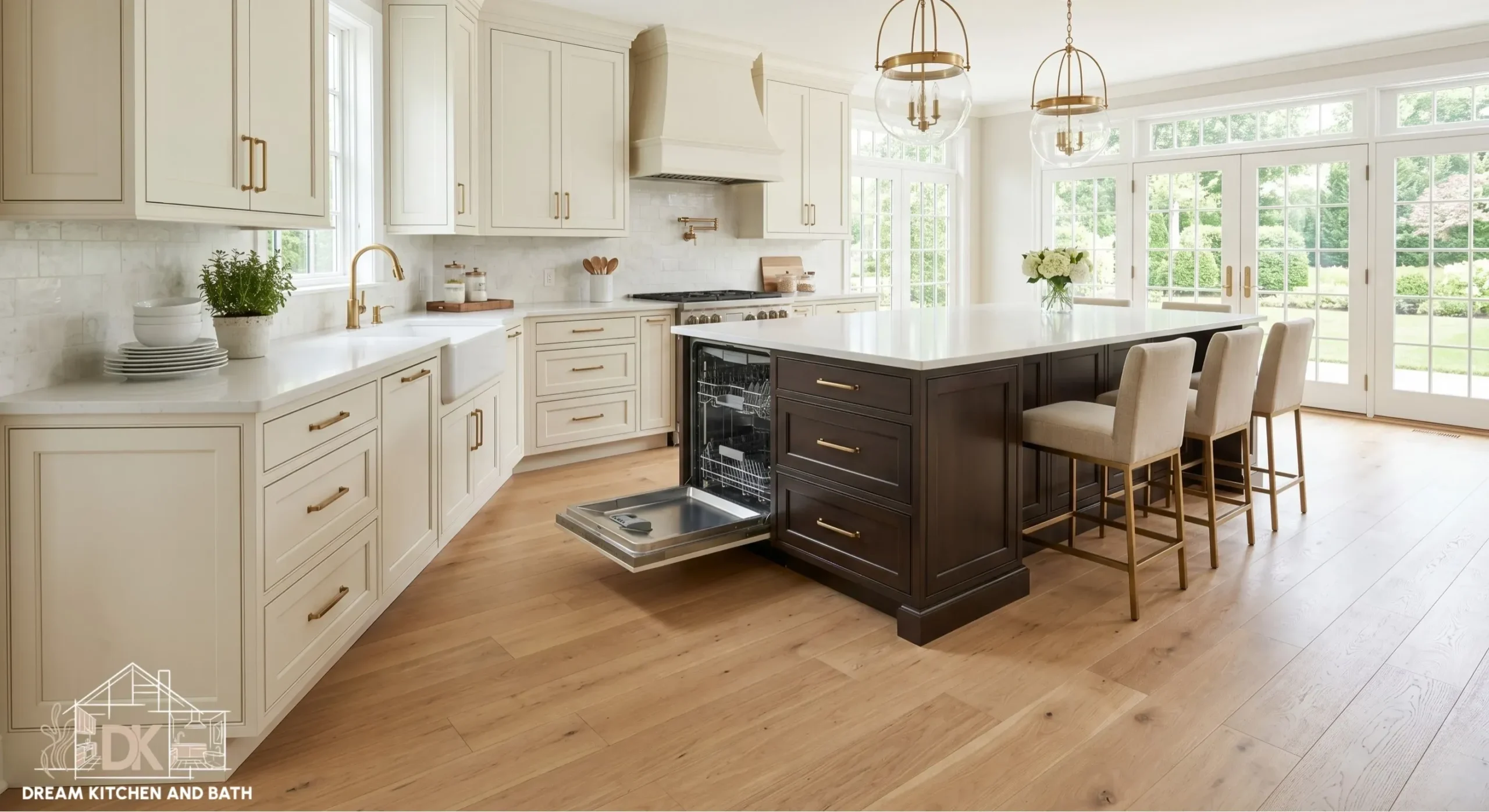
Putting a sink or cooktop in the island turns a piece of cabinetry into a plumbing and electrical project. A sink needs supply lines, a drain, and venting, and island venting is genuinely awkward because there’s no wall behind it. Cooktops need power or gas plus a downdraft or a ceiling-mounted hood. None of this is a dealbreaker, but it’s the single biggest reason an island’s cost jumps, and island sinks draw real complaints over venting headaches. If you go this route, plan the mechanicals early, not after the cabinets are ordered.
A note on outlets while we’re under the hood: islands need receptacles, and underbuilt electrical is a regret that shows up again and again. As more than one homeowner has put it, the counter wasn’t the problem; the shortage of outlets was. Plan for more than you think you’ll need.
Kitchen Island Cost in Northern Virginia (2026)
“How much does a kitchen island cost” is one of the first questions on every remodel, and the honest answer is a wide range, because an island can be a simple cabinet run or a fully plumbed workstation. As of 2026, here’s what we typically see in the Northern Virginia market.
| Island type | Typical NoVA range (2026) |
|---|---|
| Stock-cabinet prep island, laminate or basic stone top | $3,000 – $6,000 |
| Semi-custom island, stone top, seating overhang | $6,000 – $12,000 |
| Custom island with sink or cooktop, premium stone, plumbing and electrical | $12,000 – $25,000+ |
A few things move that number. Plumbing and electrical runs to the middle of the room add cost and sometimes mean opening the floor. The countertop is often the biggest single line; the right countertop for your island can swing the budget by thousands, which is why we treat it as its own decision. Seating overhangs past about 12 inches need support, either corbels or a steel bracket hidden in the counter, which adds labor. And a finishing touch like a waterfall edge, where the stone runs down the sides to the floor, can add roughly a thousand dollars or more on its own.
Treat these as planning ranges, not quotes. Material choices, the condition of your existing floor and wiring, and how custom you go all move the final figure.
Kitchen Island Pros and Cons
Stacking the trade-offs in one place makes the decision easier. Here’s how the pros and cons of a kitchen island tend to shake out.
| Pros | Cons |
|---|---|
| Adds prep space and a natural gathering spot | Eats floor space; needs 42 to 48 inches of clearance on every working side |
| Extra storage, especially with deep drawers | A sink or cooktop adds plumbing, venting, and real cost |
| Can house a sink, cooktop, or microwave drawer | Seating is often less comfortable and lower-capacity than people expect |
| Often a selling point at resale | Underbuilt outlets and tight aisles are common, lasting regrets |
| Anchors an open-plan kitchen visually | The wrong size or placement is expensive to fix later |
One smaller regret worth flagging: alignment. An island that sits off-center from the range or window, or a faucet that doesn’t line up with the cooktop behind it, is the kind of detail that looks fine in the moment and bothers people for years. It’s worth catching on the plan, not after the stone is cut.
Working With an Installer or a Design-Build Team
When people search for a kitchen island installer near me or a kitchen island contractor, what they usually need is broader than a carpenter who can set cabinets. A freestanding prep island with no utilities is well within reach of a skilled handyman or a confident DIYer. Once a sink, cooktop, gas line, or dedicated circuit enters the picture, you’re coordinating plumbing, electrical, venting, permits, and inspections, and the value of one team handling all of it goes up fast.
A design-build team also catches the things that turn into regrets later: whether the aisle still works with the dishwasher open, whether the overhang has real support, whether the outlets are where you’ll want them, whether the island lines up with what’s behind it. Our Manassas team designs and builds these in Northern Virginia kitchens every week, so the failure points in this guide are the ones we’re checking for before anything gets ordered. If you’re weighing your options, you can see our recent Northern Virginia kitchens, or schedule a complimentary consultation to talk through your space.
Frequently Asked Questions
How much does a kitchen island cost in Northern Virginia?
As of 2026, a simple stock-cabinet prep island typically runs $3,000 to $6,000, a semi-custom island with a stone top and seating lands around $6,000 to $12,000, and a custom island with a sink or cooktop can reach $12,000 to $25,000 or more. Plumbing, electrical, and the countertop material are the biggest cost drivers. Treat these as planning ranges, not quotes.
What’s the minimum kitchen size for an island?
As a rough guide, you want about 13 feet of kitchen width before a standard island fits comfortably: the island itself plus 42 to 48 inches of clearance on the sides people use. Many older Northern Virginia kitchens are narrower than that, in which case a slim island, a cart, or a peninsula usually works better.
How much clearance do you need around a kitchen island?
Leave at least 42 inches of clear floor on every working side, and 48 inches if two people cook at once or a walkway passes an appliance that opens. Thirty-six inches is the absolute minimum and tends to feel tight in daily use. Always measure with the appliance doors open.
How much overhang do you need for island seating?
Plan at least 12 inches of counter overhang for comfortable knee room, and 14 to 15 inches is better. Below 12 inches, many stools won’t slide under the counter and end up sitting in the walkway. Overhangs past about 12 inches usually need hidden support brackets.
Why doesn’t anyone sit at our kitchen island?
Usually it’s the overhang, the stool height, or both. Too little overhang means knees hit the cabinets, and tall backless stools get uncomfortable quickly, so people drift to the sofa or the table instead. Counter-height stools with a 14-inch overhang are far more likely to get used.
Do I need an island, or is a peninsula or table better?
If your kitchen can’t give an island 42 inches of clearance on its working sides, a peninsula or a freestanding table is often the smarter choice. A peninsula adds counter and seating without requiring clearance on all four sides, and a table is cheaper and movable. An island earns its place when the room is wide enough to walk around it freely.
Can a kitchen island have a sink or cooktop?
Yes, but it turns the island into a plumbing and electrical project. A sink needs supply, drain, and venting, and island venting is awkward because there’s no wall behind it; a cooktop needs power or gas plus a downdraft or ceiling hood. Plan the mechanicals before the cabinets are ordered.
Should I hire a kitchen island contractor or a design-build team?
For a simple prep island with no utilities, a skilled installer is usually enough. Once a sink, cooktop, gas line, or new circuit is involved, a design-build team that coordinates plumbing, electrical, permits, and inspections will save you headaches and catch the clearance and support issues that become regrets.
The Bottom Line
The right kitchen island starts with three decisions, in this order: what you want it to do, whether the room can give it 42 to 48 inches of clearance on every working side, and which budget band fits the features you need. Get those right and the finishes are the easy part. Get them wrong and you’re living with tight walkways and empty stools, or paying to move plumbing you wish you’d planned differently.
If you’re planning a kitchen remodel in Northern Virginia, our design team in Manassas has been laying out islands like the ones in this guide for years, and we’re glad to pressure-test your floor plan before anything is built.