

A room-by-room guide to the fixtures, materials, and design details that turn an ordinary bathroom into a private retreat.
The bathroom used to be an afterthought—a tiled box with a toilet, a vanity, and a shower curtain. That era is over. Today, a well-designed bathroom is one of the highest-impact rooms in the house, both for daily comfort and for resale value. Industry data shows a quality bathroom remodel can recoup 50–70% of its cost at sale and add 3–5% to overall home value.
The design philosophy driving luxury bathrooms right now is often called “quiet luxury”: understated craftsmanship, premium materials, and long-lasting details over flashy trends. More than 60% of homeowners now prefer timeless, durable design choices over whatever is trending on social media.
Below, we walk through ten ideas—from fixtures to finishes—that can transform your bathroom from functional to exceptional. Whether you’re planning a full gut renovation in Manassas or updating a guest bath in Fairfax, these strategies scale to fit.
| 10 Luxury Bathroom Remodeling Ideas to Elevate Your HomeTHE 2026 GUIDE TO QUIET LUXURY |
| 50–70% Cost Recouped at Resale |
3–5% Added to Home Value |
60%+ Prefer Timeless Over Trendy |
| 01 Freestanding Statement Bathtub Stone resin, copper, or concrete tubs placed under a window. |
02 Walk-In Shower & Wet Room Curbless entry, rainfall shower, frameless glass. |
| 03 Tile Drenching Same tile across floors and walls. |
04 Natural Stone & Quartzite Honed finishes, durable surfaces. |
| 05 Statement Vanity Floating wood vanities with stone tops. |
06 Radiant Floors Heated floors and towel warmers. |
| 07 Layered Lighting Ambient + task + accent lighting. |
08 Smart Bathroom Smart mirrors, digital showers. |
| 09 Biophilic Design Natural materials, plants, skylights. |
10 Heritage Revival Vintage details, arches, mixed metals. |
| Mid-Range Luxury $30K – $60K Tile · Vanity · Radiant Heat |
High-End Custom $60K – $120K Wet Room · Steam · Smart Tech |
Bespoke Retreat $120K – $400K+ Spa Features · Full Smart Home |
| 60–70% Mid-Range ROI |
20–30% Luxury Premium |
| Dream Kitchen & Bath | Manassas, VA · (703) 789-8786 · dreamkitchensandbath.com |
1. The Freestanding Statement Bathtub
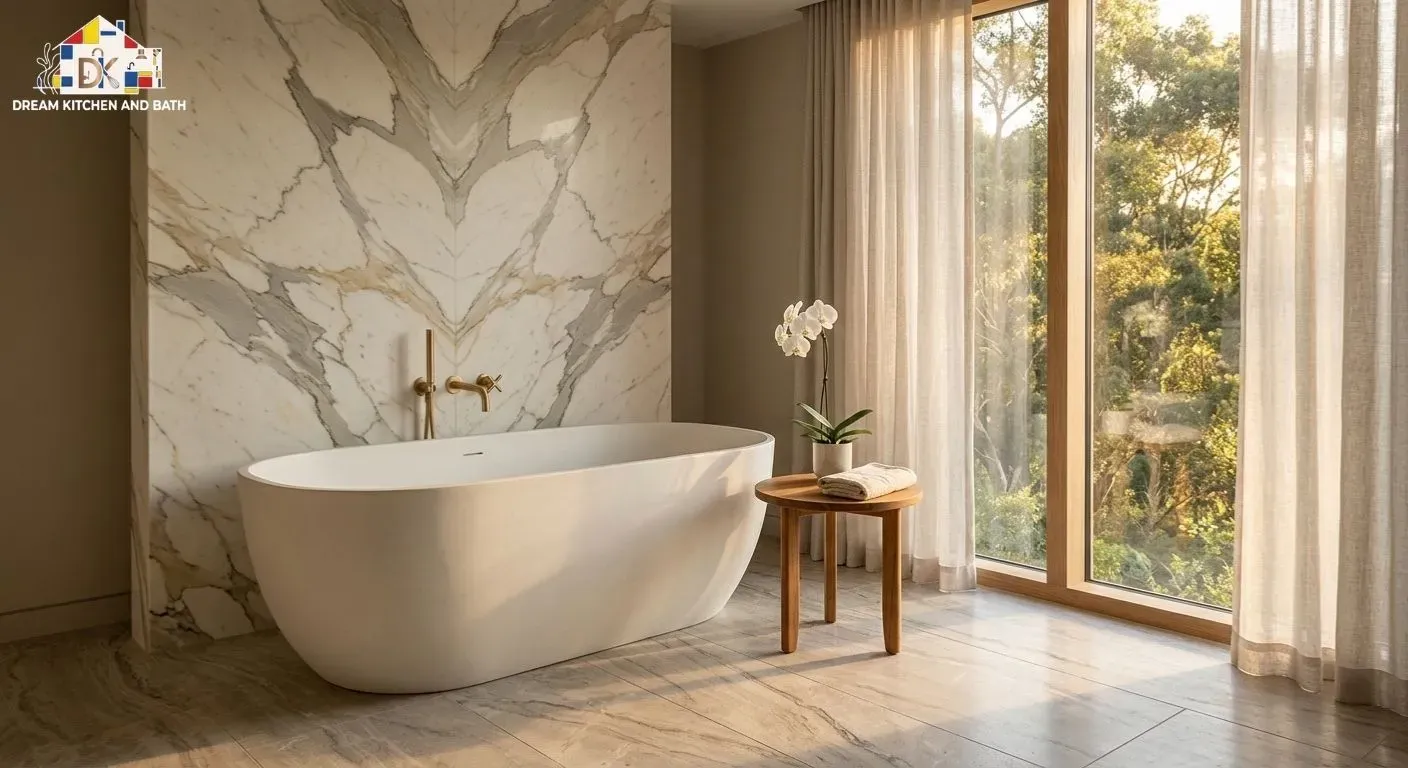
A freestanding tub is one of the fastest ways to shift a bathroom’s personality from “builder-grade” to “boutique hotel.” Unlike alcove tubs tucked between three walls, freestanding models stand on their own—sculptural, unapologetic, and impossible to ignore.
The 2026 trend leans toward monolithic, organic shapes. Think matte stone resin ovals, hammered copper basins, and thick-walled concrete vessels. Classic clawfoot designs still have their place in heritage-inspired interiors, but the momentum is clearly toward clean curves and weighty materials that feel anchored to the room.
Placement matters as much as the tub itself. Position it beneath a window, skylight, or pendant light to turn it into the room’s gravitational center. The “Vista Soak” approach—placing a sculptural tub alongside a floor-to-ceiling window with a framed landscape view—is gaining serious traction in homes with enough acreage to allow it.
Pair the tub with floor-mounted or wall-mounted fillers in brushed gold, champagne brass, or matte black. These finishes read like jewelry against stone surfaces.
For the wellness-minded: high-end freestanding tubs now come with integrated air-massage jets, chromatherapy lighting, and even cold-plunge capability for post-workout recovery.
2. Luxury Walk-In Showers and Wet Rooms
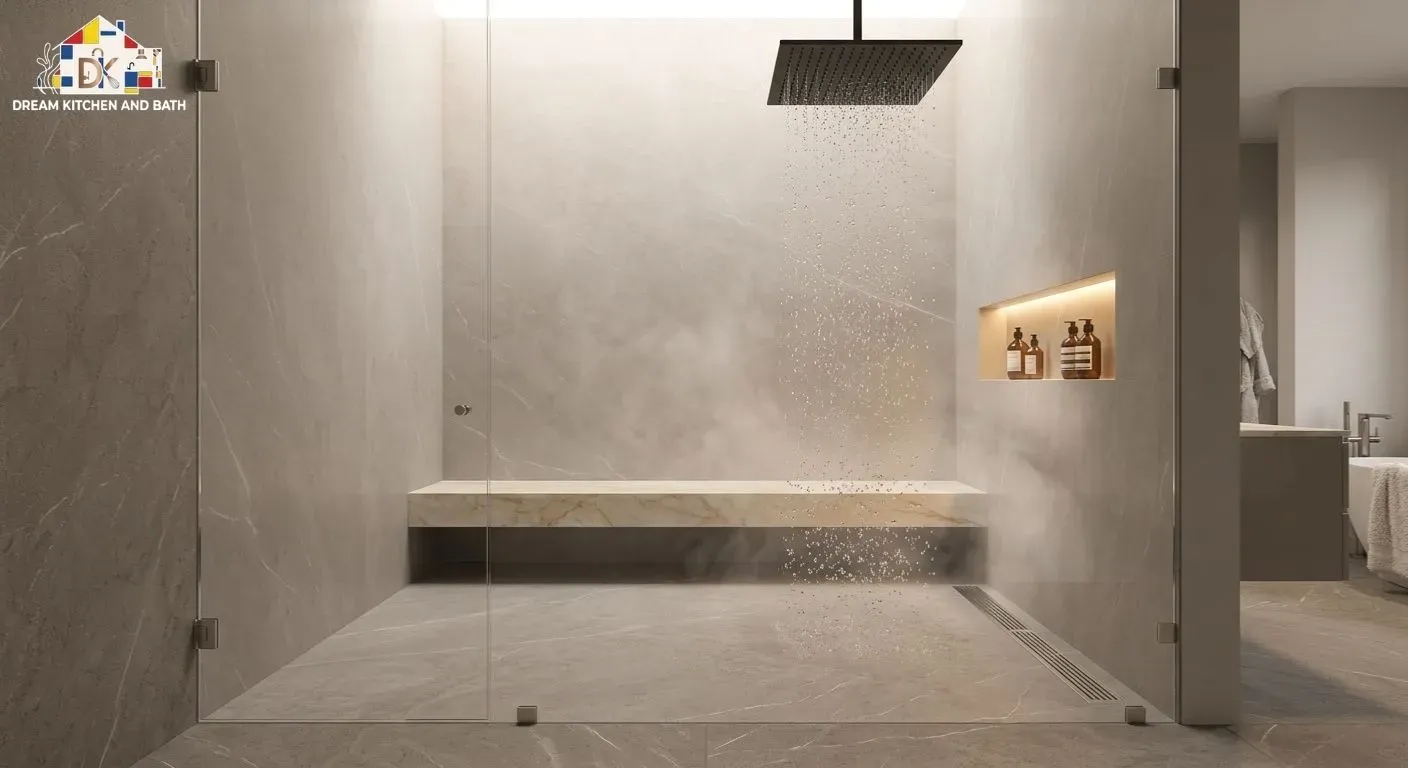
The oversized walk-in shower has overtaken the bathtub as the primary luxury fixture in most remodels—and the trend is accelerating. Curbless (also called “level-entry”) designs dominate high-end projects because they eliminate the step-over threshold, creating a seamless visual plane that makes even modest bathrooms feel substantially larger.
What separates a luxury shower from a standard one? Several things at once: a ceiling-mounted rainfall head (newer models offer adjustable droplet size and velocity), body jets at multiple heights, a built-in stone or tile bench, and concealed thermostatic valves that keep the wall surface clean. The “conservatory-style shower”—an enclosed room-within-a-room with glass on three sides—has emerged as a standout 2026 trend, designed to encourage lingering rather than rushing.
Steam integration is the next tier up. Advanced generators from ThermaSol and Mr. Steam feature rapid-start technology and self-cleaning flush systems that eliminate mineral buildup. A properly built steam enclosure needs a vapor-sealed door, floor-to-ceiling glass panels with specialized gaskets, and a ceiling slope of about one inch per foot to prevent condensation from dripping onto the bather.
Recessed shower niches—built into the wall and often lit with a subtle LED strip—replace hanging caddies and keep sightlines clean. For larger bathrooms, consider a dual-panel frameless glass enclosure to define the shower zone without interrupting the visual flow.
3. Tile Drenching: Full-Surface Impact
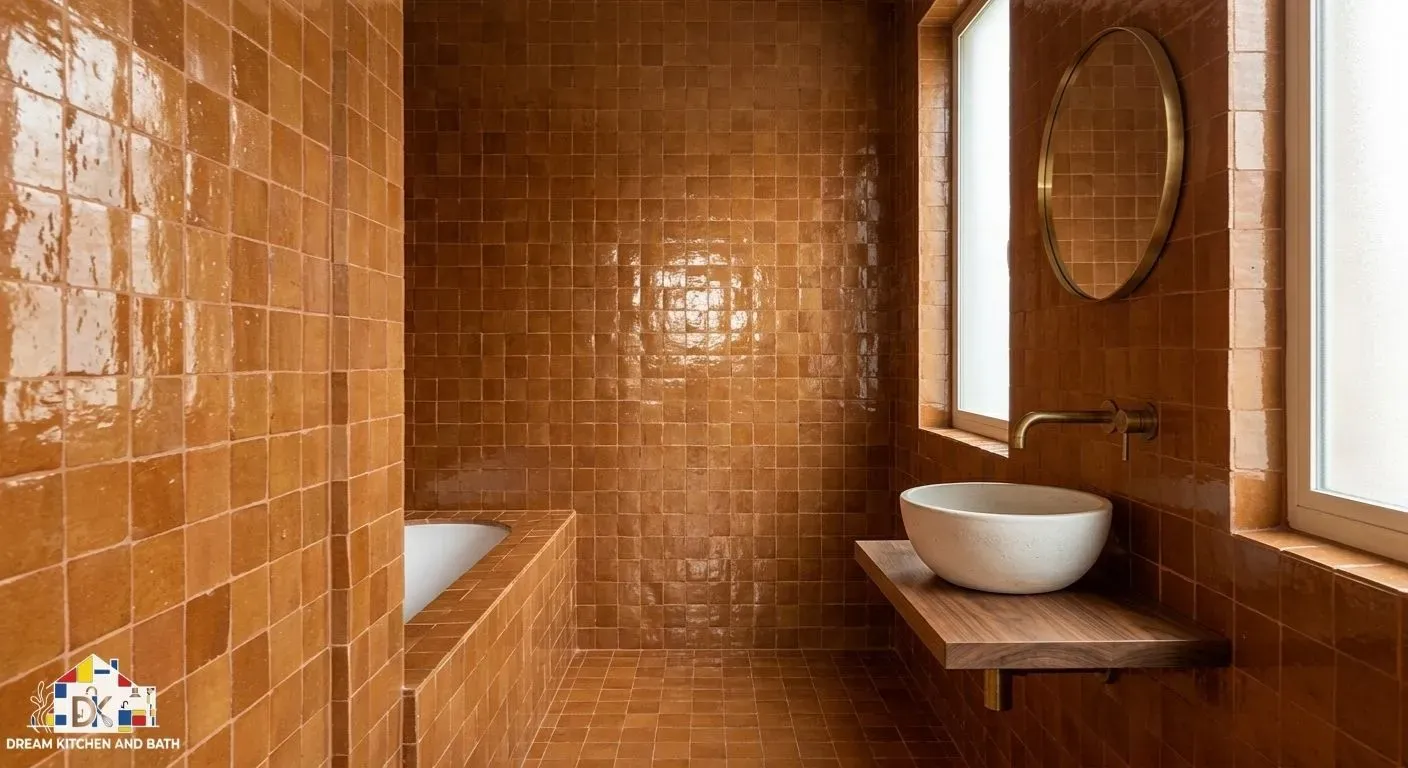
Tile drenching—extending the same tile material across floors, walls, and sometimes even the vanity backsplash—has become a core design strategy for 2026. Done well, it creates a unified, immersive environment that feels like a single carved space rather than a collection of surfaces.
The execution details matter. Large-format tiles (24×48 inches or bigger) with honed or slip-resistant finishes produce the most convincing effect, because they reduce grout lines to near-invisible. For texture and character, handmade Zellige tiles—traditional Moroccan ceramics with a slightly uneven glaze—add depth without breaking the monochrome effect.
Color is where tile drenching gets interesting. The safe choice is a warm neutral—sandy beige, soft taupe, or mushroom gray. The bolder path runs through oxblood red, forest green, deep navy, or marigold—colors that envelop the room without overwhelming it when used floor-to-ceiling.
Marble drenching is the luxury version of this idea: covering the floor, walls, and tub surround in the same dramatically veined stone. It creates a tension between cohesion and maximalism that photographs spectacularly and feels even better in person.
To break up visual monotony, alternate tile direction at a certain height (say, horizontal below the shower niche and vertical above), or designate the shower enclosure as a distinct zone with a complementary tile in the same color family.
4. Natural Stone and Premium Surfaces
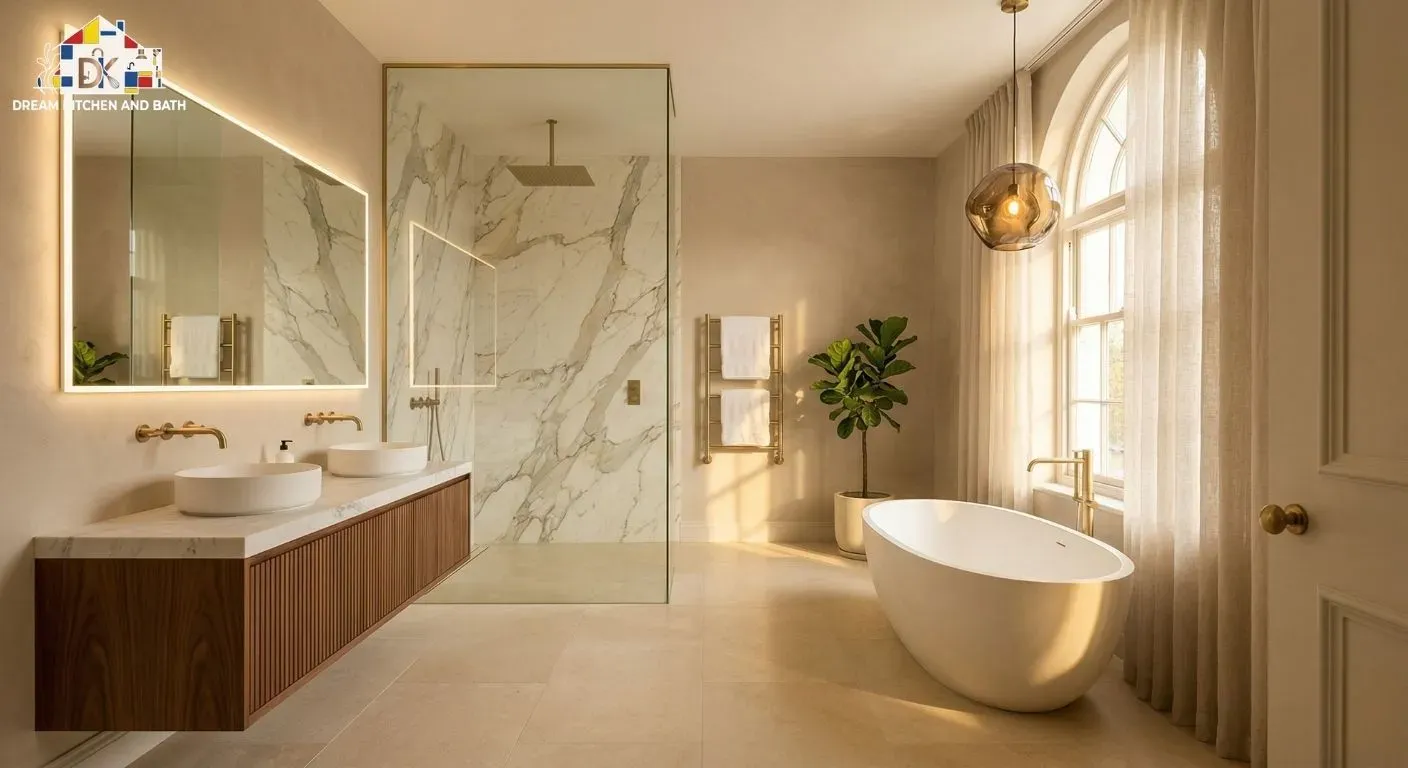
Natural stone has anchored luxury bathrooms for centuries, and the 2026 approach is more nuanced than ever. The shift is away from high-gloss polished marble and toward honed, leathered, and brushed finishes that offer a softer tactile experience and mask water spots and fingerprints far more effectively.
| Stone | Character | Best Application |
|---|---|---|
| Calacatta Gold | Warm white base with bold gold and grey veining; timeless visual impact | Vanity tops, feature walls, shower pans |
| Nero Marquina | Deep black with white lightning veins; dramatic, moody contrast | Accent walls, shower panels, minimalist basins |
| Taj Mahal Quartzite | Creamy white with gold ribbons; exceptional hardness and heat resistance | High-use counters, waterfall-edge islands |
| Verde Alpi | Intense forest green with artistic movement; biophilic richness | Statement vanities, boutique shower zones |
| Thassos White | Pure crystalline white with minimal veining; maximizes light in small rooms | Windowless bathrooms, modern/minimal aesthetics |
The quartzite resurgence: Luxury buyers are migrating back to natural quartzite from engineered quartz. Quartzite—a metamorphic rock formed under extreme heat and pressure—offers superior thermal resistance and a crystalline depth that engineered surfaces can’t replicate. Ranking around 7 on the Mohs hardness scale, it outperforms granite in scratch resistance while delivering the veined beauty of marble without marble’s vulnerability to etching.
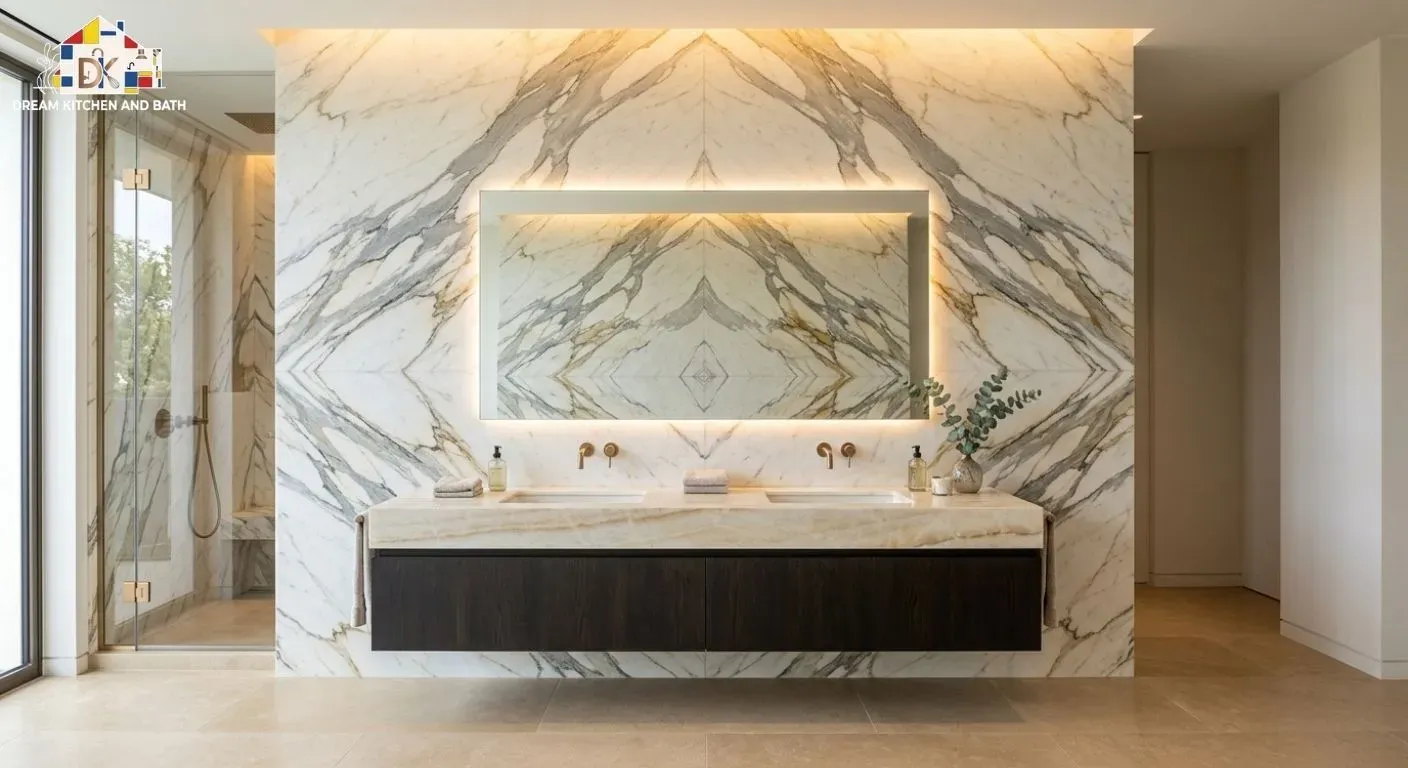
Book-matching represents the pinnacle of stone feature walls: two mirrored slabs aligned to create a symmetrical pattern, like opening a book. It’s expensive, requires precise fabrication, and delivers the kind of visual drama that stops people in their tracks.
5. Statement Vanities and Custom Cabinetry
The vanity is the workhorse of the bathroom—and in 2026, it’s also the design anchor. Double vanities are now expected in primary bathrooms, not aspirational. The real conversation is about how they’re built and finished.
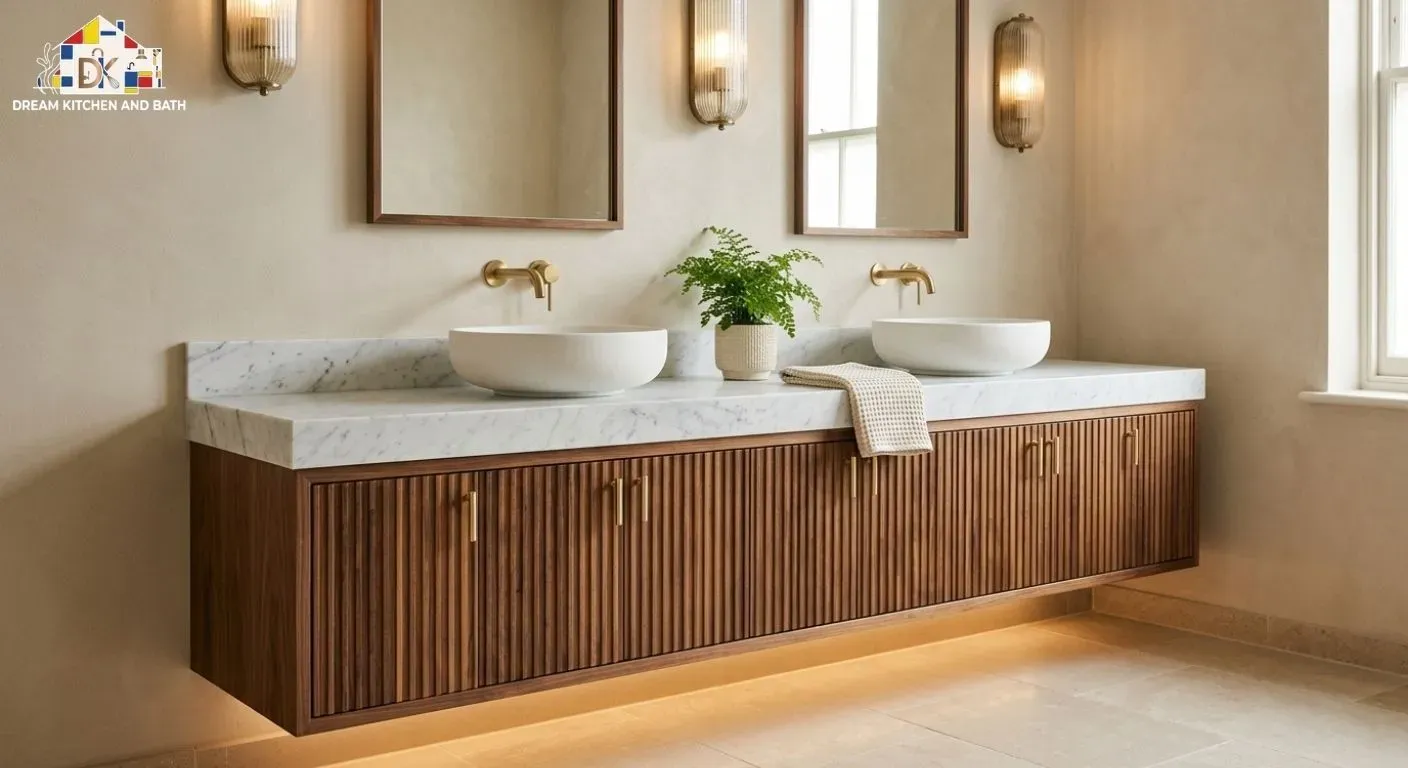
Floating (wall-mounted) vanities remain the dominant silhouette. Lifting cabinetry off the floor exposes more tile, creates the illusion of extra square footage, and makes cleaning underneath effortless. Add an LED strip beneath the floating unit for a soft ambient glow that doubles as nighttime wayfinding.
Material direction: Warm wood is the clear winner for 2026 cabinetry. Walnut, white oak, and pecan in grain-forward, fluted or reeded door profiles soften the hard surfaces of stone and glass. The look is deliberate—more like a piece of furniture than a cabinet box. Pair it with a thick, monolithic stone countertop and an undermount or vessel basin for a vanity that feels collected rather than installed.
Hardware as jewelry: Rose-toned brass, brushed gold, and champagne bronze pulls and faucets add a ceremonial quality to the vanity. Mixing two complementary metal finishes (say, brushed gold faucets with matte black cabinet hardware) creates a layered, curated effect that avoids the sterile look of a single finish throughout.
Inside the drawers: Custom organizational inserts are a quiet luxury that owners notice every single morning. Docking Drawers with built-in electrical outlets and stainless steel canisters let you power and stow hot tools without cords cluttering the counter. For skincare enthusiasts, refrigerated vanity drawers keep serums and organic treatments at their effective temperature.
6. Radiant Floor Heating
Stepping onto warm tile on a cold Virginia morning is one of those small pleasures that immediately reframes your day. Radiant floor heating—often the most underrated upgrade in a luxury bathroom—delivers exactly that, and it costs surprisingly little to run: as low as a few cents per hour for an electric mat system.
Electric radiant mats install directly beneath tile, stone, LVT, or engineered wood. They carry no moving parts, produce zero noise, and free up wall space that would otherwise go to baseboard heaters or forced-air vents. From a health and maintenance standpoint, heated floors dry faster after showers, which reduces condensation, mold risk, and slip hazards—a particularly relevant benefit in Northern Virginia’s humid summers.
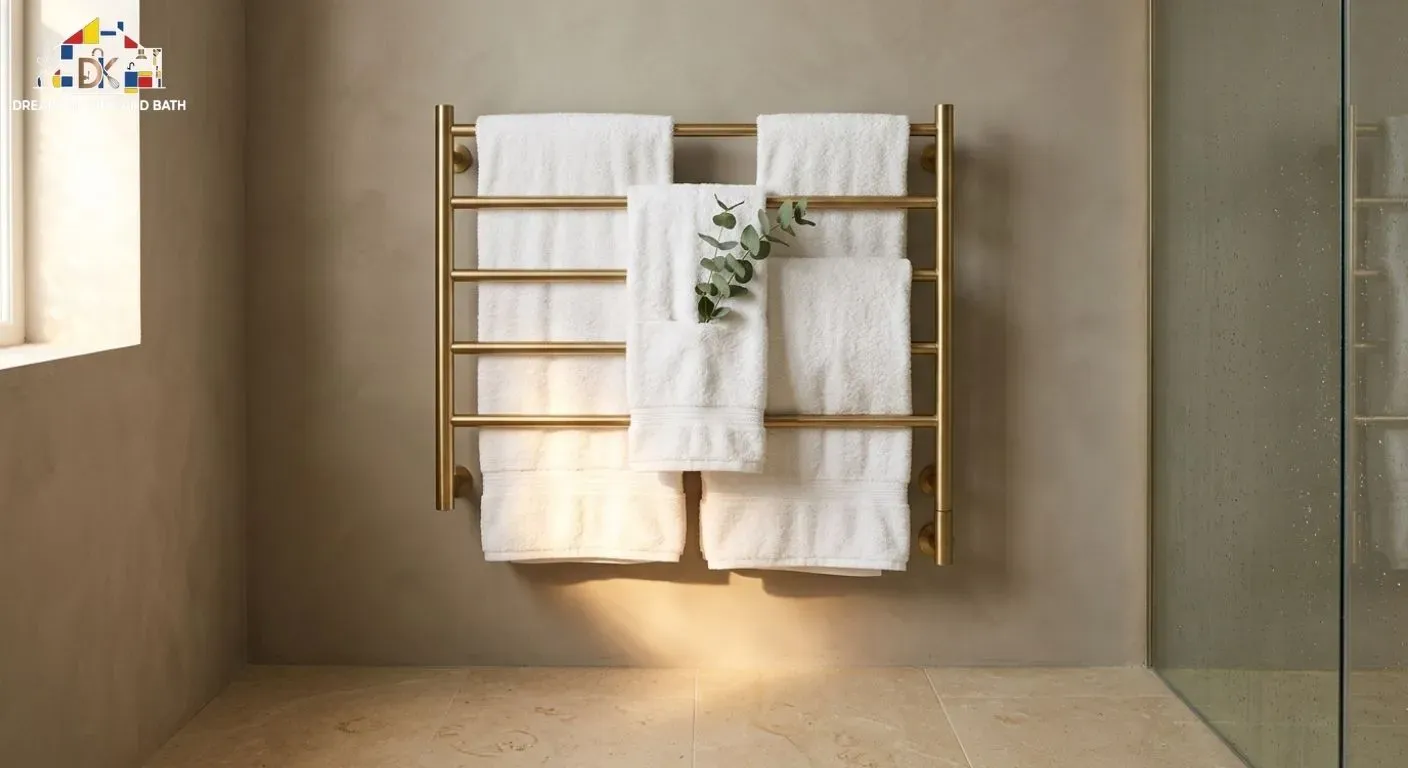
Towel warmers are the natural companion to heated floors. A wall-mounted heated towel rack uses just 60–150 watts—less than a hairdryer—and turns a cold, damp towel into a warm wrap the moment you step out of the shower. Brushed gold and matte black models double as sculptural wall hardware. Combined with heated flooring, they push the bathroom firmly into spa territory for a fraction of the cost of a full hydrotherapy setup.
Pair both systems with a WiFi-connected thermostat that learns your schedule and pre-warms the floor twenty minutes before your alarm goes off. The best systems integrate with broader smart home ecosystems (Apple HomeKit, Google Home, Amazon Alexa) via the Matter protocol, so your floor heating can be part of a larger morning automation routine.
7. Layered Lighting Design
Lighting might be the most underused tool in bathroom design. A single overhead fixture washes everything in flat, shadowless light—functional, but about as inviting as a gas station restroom. A layered approach changes the entire character of the room.
Three layers, minimum:
- Ambient: A statement pendant or chandelier above the tub sets the overall tone and gives you something beautiful to look at while soaking. Dimmer-capable LEDs in the 2700K–3000K range keep the light warm and flattering.
- Task: Sconces mounted at eye level on both sides of the vanity mirror eliminate shadows on the face—far superior to a light bar mounted above the mirror, which casts downward shadows under the eyes and chin. Alabaster wall sconces with brushed gold or dark bronze fittings produce a soft, translucent glow.
- Accent: LED strips beneath floating vanities, inside shower niches, and along baseboards provide depth and wayfinding. Motion-activated strips at floor level are a small investment that pays off every night—enough light to navigate without flipping a switch that jolts you awake.
Circadian rhythm support is the emerging frontier. Tunable LED systems that shift from cool, bright light in the morning to warm, dim light in the evening help regulate your sleep-wake cycle. Chromatherapy (colored LED lighting in the shower or tub) takes this further: blue and green for relaxation, red and orange for morning energy.
For the finish palette, step away from polished chrome. Brushed, matte, and satin metals absorb light rather than bouncing it around the room, producing what designers call a “cashmere effect”—softer, warmer, and more forgiving.
8. Smart Bathroom Technology
The best bathroom technology disappears into the architecture. You feel it working. You don’t see it.
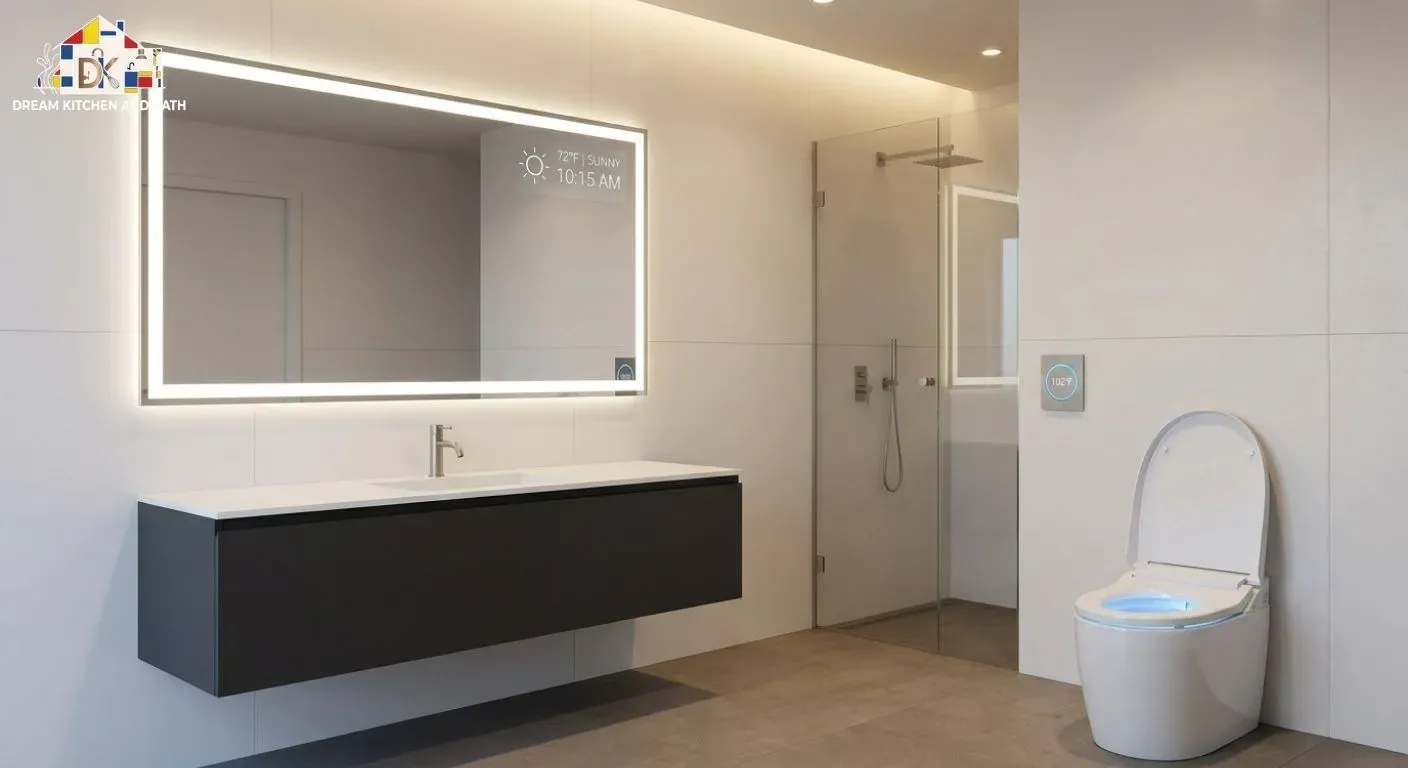
Smart mirrors have moved from novelty to expectation in luxury projects. Current models integrate anti-fog heating, adjustable color-temperature lighting (daylight for makeup, warm glow for evening), and low-profile translucent displays that show weather, calendar, and news without overwhelming the mirror’s primary function.
Intelligent toilets have matured considerably. Brands like TOTO and Kohler offer systems with touchless operation, self-cleaning technology (TOTO’s electrolyzed water system, Kohler’s UV-light sanitation), heated seats, integrated bidet functions, and automatic lid opening. Kohler’s Dekoda system, introduced in 2026, attaches to the bowl and analyzes waste for hydration levels, gut health markers, and early blood detection—transmitting the data to a mobile app for longitudinal health tracking.
The Matter protocol has been a game-changer for smart bathroom interoperability. It allows devices from different manufacturers (Kohler, TOTO, Moen, Hansgrohe) to communicate within a single ecosystem. The practical result: you can create a “Morning Routine” scene that simultaneously activates radiant floor heating, sets the shower to your preferred temperature, switches the mirror to task lighting, and plays audio through concealed speakers—all triggered by a single voice command or phone tap.
Digital shower controls with pre-set user profiles round out the picture. Each family member saves their preferred water temperature, spray pattern, and duration. No more fiddling with the handle and waiting for it to warm up.
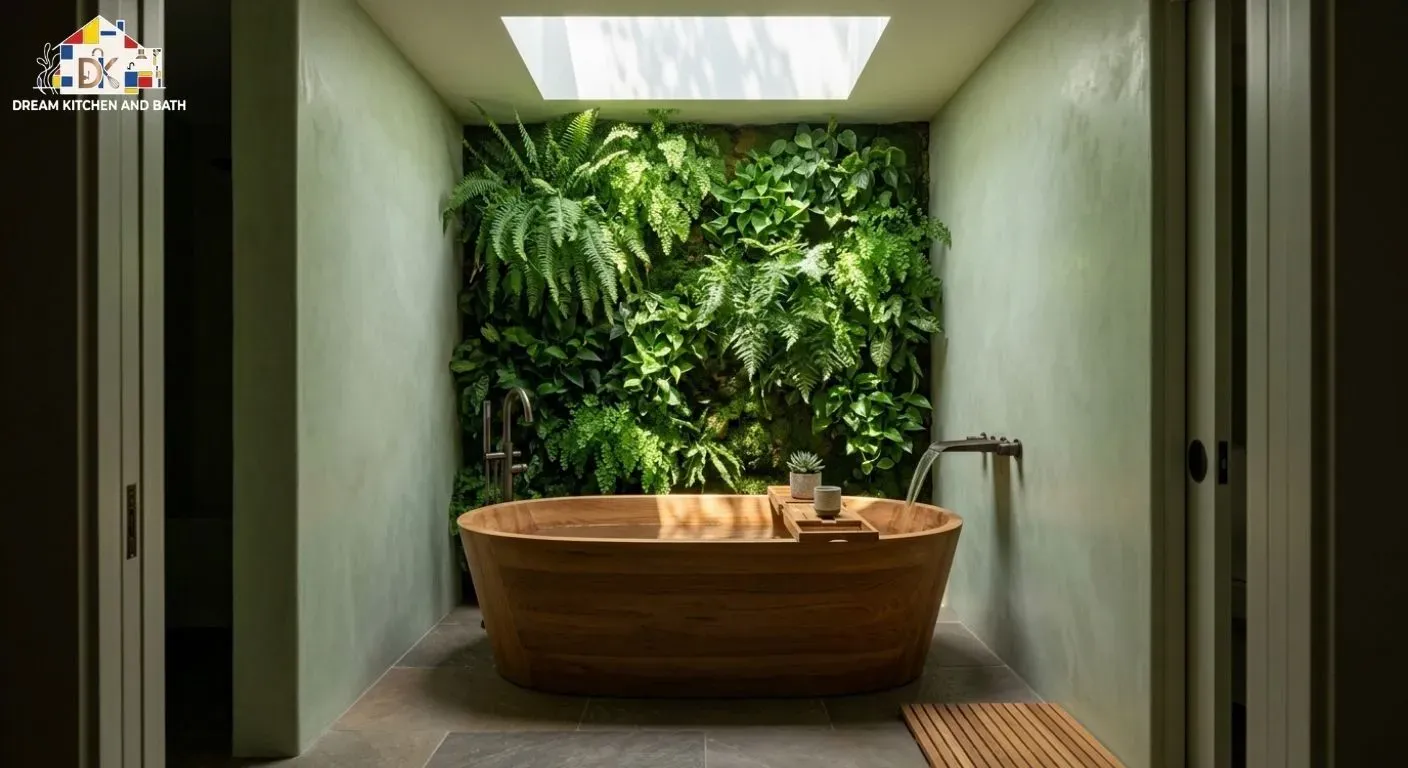
9. Biophilic Design: Bringing the Outdoors In
Biophilic design—connecting interior spaces to the natural world through materials, light, and living elements—is one of the most persistent and well-supported directions in luxury bathrooms. It hasn’t peaked. If anything, 2026 is pushing it further.
Natural materials first. Stone floors, marble vanity tops, slate accent walls, and wooden shelving or cabinetry create a grounding, earthy atmosphere before you add a single plant. Exotic tropical hardwoods like teak, ipe, and wenge—prized for their natural oil content and water resistance—bring warmth that counterbalances cool stone surfaces. Walnut cabinetry, in particular, has surged in popularity for its architectural depth and ability to soften rigid contemporary lines.
Microcement and lime-based plasters (such as Tadelakt or limewash) are replacing traditional tile in many high-end projects. These grout-free, continuous surfaces wrap around walls, floors, and even custom vanities, creating a velvety, sculptural feel that mimics polished stone but feels warm to the touch. They also eliminate the #1 maintenance headache of luxury bathrooms: degrading grout lines.
Living elements: Ferns, orchids, and peace lilies thrive in bathroom humidity. A vertical living wall creates an immersive focal point; even a few well-placed potted plants on a teak shelf can shift the room’s energy. Botanical waterproof wallpaper—installed directly inside the shower—is the more daring version of this idea.
Light as material: Skylights positioned directly above the shower allow for “sky-bathing.” Clerestory windows (set above eye level) bring in natural light and ventilation while maintaining privacy. Frosted, gluechip, and rain-textured glass in picture windows blur the view outward while flooding the space with soft, diffused daylight.
Color palette: Warm earth tones anchor the biophilic bathroom—terracotta, ochre, clay reds, warm browns, soft sage greens—paired with bronze or brass metallic accents. These tones absorb and reflect light with more depth than stark white, which can feel clinical under the overcast skies common in our Northern Virginia winters.
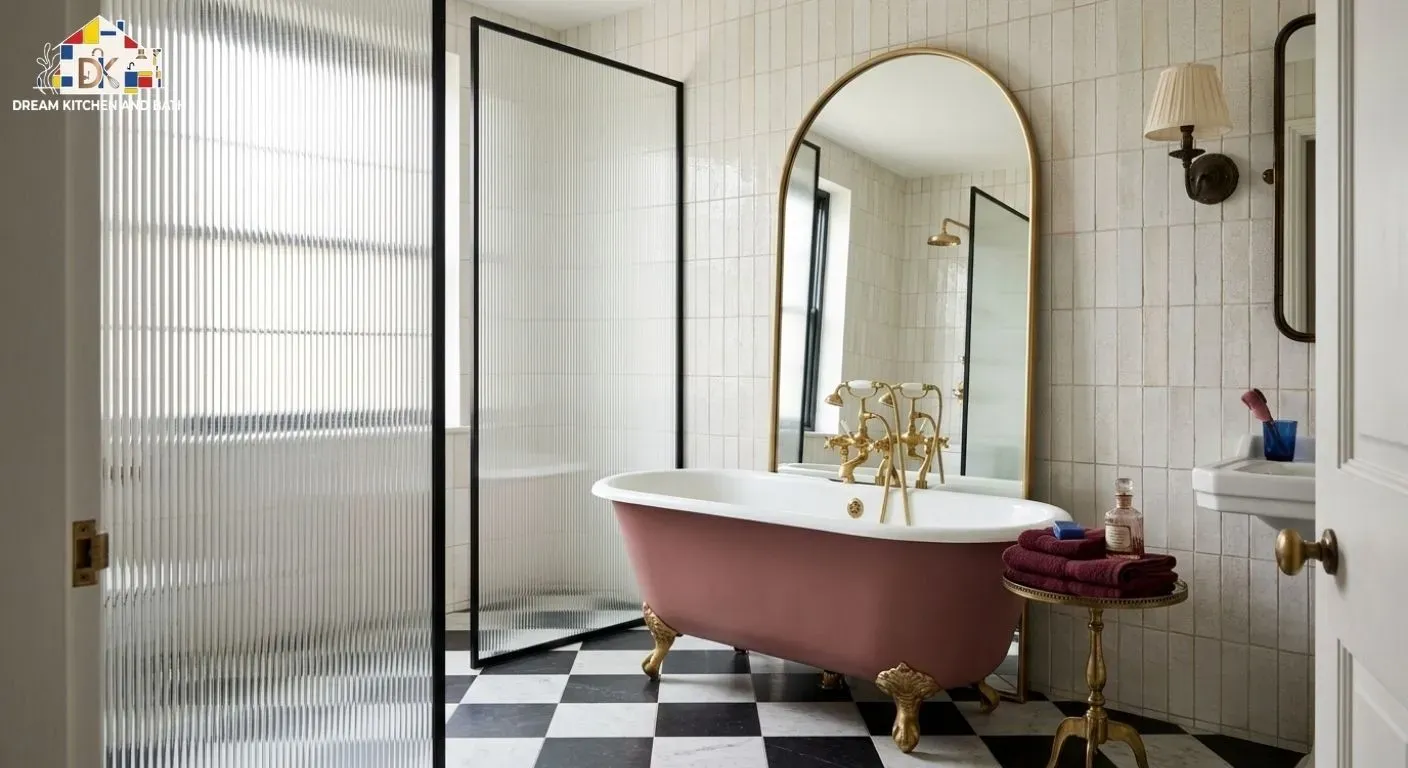
10. Heritage Revival and Sculptural Details
On the opposite end of the spectrum from minimalism sits the “Heritage Revival” aesthetic—one of 2026’s most distinctive directions. It draws on historical craftsmanship, ornate detail, and a romantic sensibility that feels calming rather than cluttered.
Signature elements: Arched mirrors introduce softness and architectural grandeur. Curved basins, rounded faucet profiles, and organically shaped accessories replace the hard right angles of previous years. Rich jewel tones—blush pink, powder blue, emerald, burgundy, deep sapphire—layer into the neutral base to create warmth and personality.
For a Parisian-inspired approach, think ornate furniture-style vanities, claw-foot bathtubs, and textured tiles in white and cream. Mixed metal finishes—brushed gold alongside champagne brass alongside matte black—create a collected, curated atmosphere that avoids looking like everything was ordered from the same catalog on the same afternoon.
Fluted glass partitions, reeded wood paneling, and decorative wall sconces add tactile rhythm to the room without consuming floor space. These details cost relatively little compared to fixtures and stone, but they account for a disproportionate share of the room’s character.
What’s the Return on a Luxury Bathroom Remodel?
A luxury bathroom remodel is a significant investment, and the return depends heavily on execution and context. Here’s the general picture:
| Project Tier | Typical Range | What’s Included |
| Mid-Range Luxury | $30,000 – $60,000 | Quality stone tile, dual vanities, high-end fixtures (Moen/Delta/Hansgrohe), radiant heat, frameless glass shower |
| High-End Custom | $60,000 – $120,000 | Smart toilets (TOTO/Kohler), curbless wet rooms, steam generators, book-matched marble, custom cabinetry |
| Bespoke Wellness Retreat | $120,000 – $400,000+ | Large-format slabs, structural modifications, full smart-home integration, hydrotherapy tubs, chromatherapy |
Industry data suggests midrange bathroom remodels recoup roughly 60–70% of their cost, while ultra-high-end projects recoup closer to 40–50%. The difference isn’t a knock on luxury—it’s a reminder that the most extravagant features serve the owner’s lifestyle more than the next buyer’s budget.
Three rules for maximizing ROI:
- Match the neighborhood. An $80,000 bathroom in a $300,000 home won’t return what the same investment yields in a $750,000 home. Appraisers compare your house to nearby sales, and buyers calibrate expectations accordingly.
- Invest in materials, not trends. Real stone, quality fixtures, and professional waterproofing signal a well-maintained home. Buyers trust what they can touch.
- Keep it universal. If you’re renovating with resale in mind, lean toward clean design and durable materials over highly personal choices. Your emerald Zellige tile may thrill you—but the next owner might see a $15,000 demo project.
- Budget 20–30% for high-impact luxury features. Heated floors, towel warmers, a quality freestanding tub, and warm metal fixtures deliver the strongest combination of daily comfort and perceived value at resale. These are the upgrades buyers remember during a walkthrough.
Design Style Quick-Reference
| Style | Key Materials | Signature Features | Color Palette |
| Quiet Luxury | Marble, stone, oak | Floating vanity, concealed tech, honed finishes | Warm neutrals, cream, taupe |
| Spa / Biophilic | Natural stone, wood, bamboo | Living walls, rain shower, soaking tub, skylights | Earthy greens, clay, warm white |
| Heritage Revival | Ornate tile, brass, porcelain | Roll-top bath, arched mirror, fluted panels | Blush, sapphire, burgundy |
| Tile Drenching | Large-format tile, Zellige | Floor-to-ceiling coverage, minimal grout lines | Oxblood, marigold, forest green |
| Smart Contemporary | Glass, steel, engineered stone | Smart mirror, heated floor, digital shower | Black, white, brushed gold |
Frequently Asked Questions About Luxury Bathroom Remodeling
How much does a luxury bathroom remodel cost?
It depends heavily on the scope. A mid-range luxury remodel — quality stone tile, dual vanities, radiant floor heating, and frameless glass shower — typically runs $30,000 to $60,000. High-end custom projects with smart toilets, steam generators, curbless wet rooms, and book-matched marble fall between $60,000 and $120,000. Bespoke wellness retreats involving structural modifications, full smart-home integration, and hydrotherapy tubs can reach $120,000 to $400,000 or more. Material choices, labor market, and the complexity of plumbing or electrical rerouting are the biggest cost drivers.
How long does a bathroom remodel take?
A full luxury bathroom remodel typically takes 8 to 12 weeks from demolition to final walkthrough. The timeline breaks down roughly as: 2–4 weeks for design, material selection, and permitting; 1 week for demolition; 1–2 weeks for plumbing and electrical rough-in; 2–3 weeks for waterproofing, tile, and surface installation; and 1–2 weeks for fixtures, lighting, and finishing. Custom-ordered items like imported stone slabs, smart toilets, or specialty glass can add lead time. Always budget an extra 1–2 weeks for unforeseen issues like hidden water damage or supply delays.
What adds the most value to a bathroom remodel?
The upgrades that consistently deliver the strongest ROI are: custom cabinetry with quality hardware, upgraded lighting (especially layered schemes with sconces and dimmers), natural stone or large-format tile surfaces, curbless shower conversions, and heated flooring. These features signal a well-maintained, thoughtfully designed home to buyers. Industry data shows midrange bathroom remodels recoup roughly 60–70% of their cost at resale, and a quality renovation can add 3–5% to overall home value.
Are freestanding tubs still popular in 2026?
Yes, and more so than ever — but placement and material matter more now than size. The 2026 trend favors sculptural, organic shapes in matte stone resin, hammered copper, or concrete over traditional glossy acrylic. Designers are prioritizing where the tub sits (beneath a window, under a skylight, as a room centerpiece) and how it interacts with the surrounding architecture. Freestanding tubs remain one of the strongest single-feature upgrades for perceived luxury and buyer appeal.
What bathroom finishes are trending for 2026?
Warm metals have overtaken cool chrome as the dominant hardware finish. Brushed gold, champagne bronze, and brushed brass appear on faucets, shower systems, cabinet pulls, towel bars, and lighting fixtures. Honed and leathered stone finishes are replacing high-gloss polished marble. For cabinetry, warm wood species like walnut and white oak in grain-forward, fluted or reeded profiles are the clear front-runners. Matte and satin surfaces across the board are preferred over anything reflective.
How do I make a small bathroom look luxurious?
Focus on materials and light rather than square footage. Use large-format tiles (fewer grout lines make a small room feel larger), install a curbless shower to eliminate visual barriers, choose a floating vanity to expose more floor space, and add a backlit LED mirror to create depth. Warm neutrals, a single accent material (like a veined marble niche), and a heated floor all punch well above their weight in small spaces. Avoid too many competing materials — restraint is what reads as luxury in a tight room.
Do I need a permit to remodel my bathroom in Virginia?
In most Virginia jurisdictions, you need a permit if the remodel involves changes to plumbing, electrical wiring, or structural elements (like moving walls or enlarging a window). Cosmetic updates — replacing tile, painting, swapping fixtures on existing connections — generally don’t require permits. However, permit requirements vary by county and city. In Manassas and Prince William County, any work that alters plumbing or electrical systems requires a permit and inspection. A reputable design-build contractor will handle the permitting process for you.
What is the best flooring for a luxury bathroom?
Natural stone (marble, limestone, or slate) and large-format porcelain tile remain the top choices for luxury bathrooms. Porcelain offers superior moisture resistance and near-zero maintenance, while natural stone delivers unmatched visual depth and uniqueness. Both pair well with radiant floor heating, which is now considered a near-standard feature in high-end projects. Quartzite is gaining popularity for its combination of marble-like beauty and granite-level hardness. For a warmer look, engineered hardwood or teak can work in well-ventilated bathrooms, but waterproof luxury vinyl tile (LVT) is a practical alternative that closely mimics natural materials.
Ready to Start Your Luxury Bathroom Remodel?
Dream Kitchen & Bath is a Manassas, Virginia-based, full-service design-build remodeling company. We handle every phase—design, material selection, construction, and finishing—so you get a single point of contact from first sketch to final walkthrough.
We serve homeowners across Northern Virginia, including Manassas, Fairfax, Centreville, Woodbridge, Gainesville, and the surrounding communities. Whether you’re envisioning a spa-inspired primary bath, a refined guest powder room, or a full wet-room conversion, our team has the experience and the trade partnerships to bring it to life.
Schedule a free design consultation: Call us at (703) 789-8786 or visit dreamkitchensandbath.com/contact-us to get started.